
By Paul Radcliffe
They looked like teddy bears. Well, a bit like teddy bears but at five-year-old Oscar's experience of extraterrestrials was limited. He had seen them on television, the ones who lived on the moon. They certainly looked like teddies, apart from the long noses, and they spoke in strange whistling noises. Oscar enjoyed watching them. He knew they had all kinds of adventures on the moon.
One of Oscar's favourite toys — that wasn't really a toy — was a small torch. He liked the way he could wave the beam into patterns on the bedroom wall when his light was turned off. He sometimes asked for his curtains to be left open and he liked to look up at the moon. A big yellow circle in the sky. It even had a face which seemed to be looking down at him. His dad had told him that the face was the Man in the Moon. The man didn't have a name. He was just the Man in the Moon.
Oscar's dad knew that Oscar really liked watching the little teddy-like aliens on the moon. He had told him that he wasn’t sure, but if Oscar shone his torch at the moon, one of the alien nearly-teddies would notice and would wave back. Dad couldn't be sure, because they might be busy. Alien teddies have very busy days. But Oscar thought it was worth a try. He got out of bed and picked up his torch. He could hear the television downstairs. Oscar walked quietly to the window. As usual, his dad had left the curtains halfway open. So the room was never really dark.
The moon was what Dad called a full moon. It was hanging in the sky. It was like one of the Christmas decorations Oscar had placed on the tree a few weeks ago. Oscar pointed the torch upward. Upward, toward the moon — waiting and wondering. If only a teddy would wave back, but they had lots to do. Earlier that evening they had been making a house out of an old rocket. The beam from Oscar's torch went into the cold night sky and it seemed to fade. But it was definitely on its way to the moon.
Two hundred thousand miles away, a small creature — not quite a teddy bear — was looking toward Earth from the summit of Mons Huygens. Oscar didn't know that this was the highest point on the nearside of the moon. The creature blinked twice. Two more nearly alien teddies appeared on the grey dust of the summit. The light from Oscar's torch was spreading and spreading so wide that nobody on the moon could possibly see it. But the teddies were very clever indeed. Two of them brought something that looked like a big football made of blue and yellow glass, and the colours swirled as if they were in a snow globe.
Every night, the teddies brought it to the highest place on the face of the moon, and they looked for light from children's torches in places like England and New Zealand. And-as Oscar's dad had said — they waved if a child waved at them. They stood in front of the snowglobe thing and I suppose they must have turned it on in some way. Three very big teddy aliens, just like the ones from the television, appeared on the big yellow moon. They waved at Oscar — who almost dropped his torch. The teddies waved as they did at the end of every episode, but they were definitely waving back at Oscar.
Who called for his dad. His dad was shaking his shoulder and asking what the matter was. And Oscar was in bed.
You were dreaming, son. It's ok. Dad was telling him it was ok, but the little boy was not upset, he was excited.
I saw the teddies, the moon teddies!
But it was late, and Oscar soon fell asleep. As children sometimes are, more tired than they realise. The curtains were still open, and the Man on the Moon, enigmatic as ever, was still smiling down.
A long way away, on the summit of Mons Huygens on the moon, the teddies carried the snowglobe thing down the slope.They would come back soon.That is the thing about teddies on the moon.
If you wave at them, they will always be waving back.
Even if you can't quite see them.
On the wall outside the house, a sleeping ginger cat — whose name was Woo Woo by the way — twitched his tail.
Woo Woo was dreaming. As Oscar had been.
I think.

About the Author
 Based in New Zealand, Registered Nurse.
Grew up in England. Had an aunt who lived in a haunted farmhouse.
A cowled monk, obviously previously published in UK and US magazines.
Spent — and spends — most of his working life in Emergency Departments.
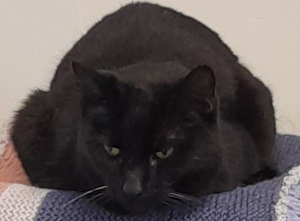
He blames any untidiness in his flat on a resident poltergeist which resembles a little grey cat.



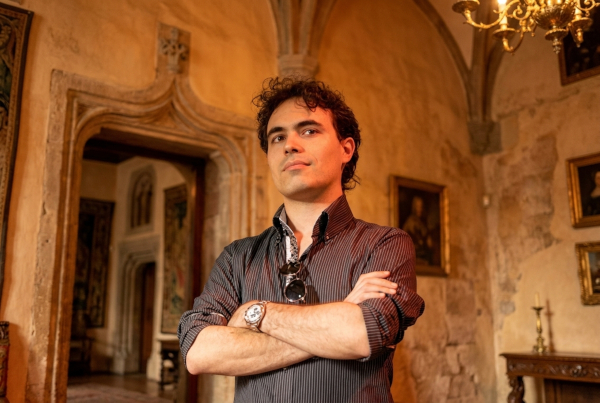








 Tom Wrosch is a retired policy analyst with the State of Oregon, and resides with his wife in Salem.
 Brian Biswas lives in Chapel Hill, North Carolina, USA.
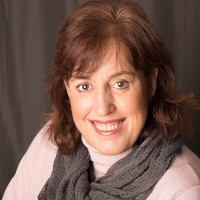 Geraldine Borella writes fiction for children, young adults and adults. Her work has been published by Deadset Press, IFWG Publishing, Wombat Books/Rhiza Edge, AHWA/Midnight Echo, Antipodean SF, Shacklebound Books, Black Ink Fiction, Paramour Ink Fiction, House of Loki and Raven & Drake
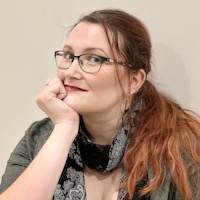 Emma Louise Gill (she/her) is a British-Australian spec fic writer and consumer of vast amounts of coffee. Brought up on a diet of English lit, she rebelled and now spends her time writing explosive space opera and other fantastical things in
 Alistair Lloyd is a Melbourne based writer and narrator who has been consuming good quality science fiction and fantasy most of his life.
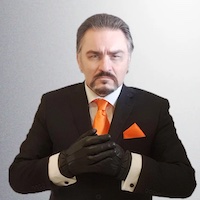
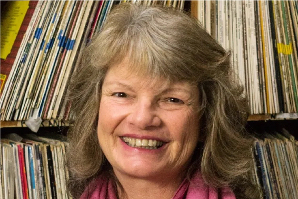 My time at Nambucca Valley Community Radio began back in 2016 after moving into the area from Sydney.
 Mark is an astrophysicist and space scientist who worked on the Cassini/Huygens mission to Saturn. Following this he worked in computer consultancy, engineering, and high energy research (with a stint at the JET Fusion Torus).
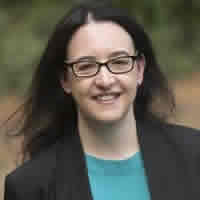
 Tim Borella is an Australian author, mainly of short speculative fiction published in anthologies, online and in podcasts.
 Ed lives with his wife plus a magical assortment of native animals in tropical North Queensland.
 Sarah Jane Justice is an Adelaide-based fiction writer, poet, musician and spoken word artist.
 Merri Andrew writes poetry and short fiction, some of which has appeared in Cordite, Be:longing, Baby Teeth and Islet, among other places.
 Barry Yedvobnick is a recently retired Biology Professor. He performed molecular biology and genetic research, and taught, at Emory University in Atlanta for 34 years. He is new to fiction writing, and enjoys taking real science a step or two beyond its known boundaries in his