
By Philipp Knutzen
No, no, no, that can’t be true. I’m not like that. Or am I?
I had volunteered as a test subject for a new device that promised to revolutionise the world of first impressions: MyDentity — Look into the Mirror. I thought it was a rather lousy slogan when I found the posting at my university’s online bulletin board, but subtlety has never been a strength of start-ups trying to be visionary. Still, for a psychology student like me, testing something called the Dual Identity Mirror felt almost obligatory. Plus, it was easy money.
The DIM was the logical next step in the spiral of self-optimisation everyone had been trapped in for decades. First, we counted steps, then calories. Then we tracked sleep cycles, stress levels, hydration, focus intervals. If you knew how to read the metrics, you could practically predict behavior.
The lab technician who welcomed me at the entrance briefly explained the set-up while we were walking down the hall to the lab: “You will meet yourself in a controlled setting for about ten minutes.” I nodded as if it made perfect sense. But really, I had no idea how it would work. Before we started, I had to sign a sixteen-page waiver. I skimmed the document. When I reached the clause “You may not like what you meet,” I almost smiled and signed the waiver without reading the explanations.
Before the experiment could start, the technician quickly pierced my fingertip for the blood sample and led me to the waiting room, where I familiarised myself with the procedure by reading the elegantly designed brochure. For the experiment, a temporary clone, the “flash-grown host” as it was called in the brochure, was created and a real-time extraction of my neurological architecture was mapped onto it. It became me, temporarily, but without knowing it. I put the brochure down for a minute and tried to imagine what that meant and how they were going to flash-grow a clone of myself when a girl from my Erik Erikson class was led into the room by an assistant. Apparently, she had found the same ad. She hadn’t struck me as particularly academic or even smart. I nodded her way with this fast upward nod of recognition, the kind that usually invites a short conversation, but she only glanced at me briefly before sitting down at the other end of the room. “You here to show them this whole thing is nonsense too, or are you just curious?” I asked. She briefly looked up from her phone, raised her eyebrows, and looked back down.
I continued reading and learned that after the test was done, my clone degraded due to what they called “cellular expiration”. I tried to picture myself crumbling to pieces, the fragments foaming slightly before someone hosed the remains into a drain. Anyway, the clone’s identity was blurred just enough to let him feel like himself (or should I say: myself?) while believing he was someone else. “Selective neural amnesia” would be induced by taking a pill which made sure neither the clone nor I could recognise each other. I swallowed the pill with a large sip of water and waited for the effect to kick in.
Shortly after, I was led into the examination room. He was already sitting there. Plain jeans and t-shirt, his arms crossed, slightly defensive but pretending not to be.
“Hi,” he said. The voice sounded familiar like I had heard it on TV many times.
“Hi.”
We shook hands. His grip was firmer than necessary, almost competitive.
“So,” he said, leaning back, “what do you do?”
“Study psychology.”
He exhaled through his nose: “Figures.”
“What’s that supposed to mean?”
“Nothing,” he said quickly. “You just seem like someone who likes to analyse people.”
I shrugged. “Better than being analysed.” It sounded more defensive than I had hoped it to be.
He snorted again and, without asking me anything else, he started to explain his research thesis. I nodded, waiting for him to finish, but he never did.
After the meeting, I filled out a survey, rating the encounter. When the neural amnesia had worn off and I was fully myself and aware of the test setting again, the technician asked me into the lab and played the recording. I was not at all prepared for this.
I had just met and talked to what I believed was a complete stranger, but now I could watch myself sitting opposite ... myself! The looks, tone and pitch of my voice, everything was perfect. It freaked me out so much I could only stand it for a moment before I had to look away and tell the technician to stop the recording. He asked if I wanted to take a break. Without saying anything, I went outside.
In the close-ups of my face, I saw it: flickers of disgust, apprehension, and dislike in my own eyes while talking to myself. The same flickers I had noticed in the eyes of dates or interviewers, and — hell — even in the eyes of close relatives and good friends sometimes. In the survey, I had rated myself a 3 out of 10. Not very likable.
On my way home, I wondered what that girl from my class would have rated me.

About the Author
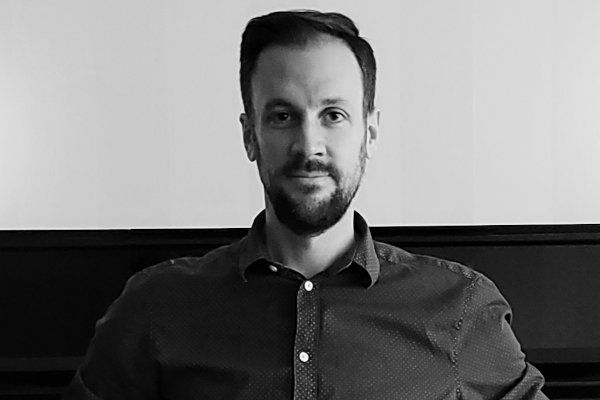
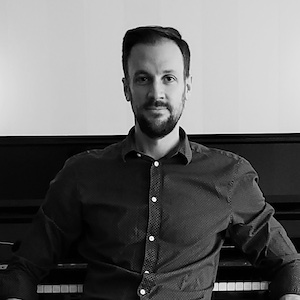 Philipp Knutzen teaches English and biology by day and writes speculative fiction whenever life allows it.
His stories explore psychology, identity, and the uneasy places where science and philosophy overlap.
When words aren't enough, he composes neoclassical music.






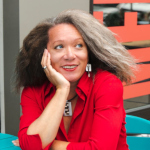 Tara Campbell is an award-winning writer, teacher, Kimbilio Fellow, fiction co-editor at Barrelhouse, and graduate of American University's MFA in Creative Writing.
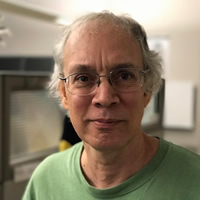 Brian Biswas lives in Chapel Hill, North Carolina, USA.
 Sarah Jane Justice is an Adelaide-based fiction writer, poet, musician and spoken word artist.
 Mark is an astrophysicist and space scientist who worked on the Cassini/Huygens mission to Saturn. Following this he worked in computer consultancy, engineering, and high energy research (with a stint at the JET Fusion Torus).
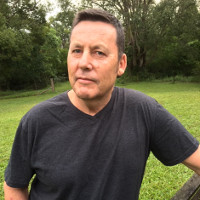 Tim Borella is an Australian author, mainly of short speculative fiction published in anthologies, online and in podcasts.
 Merri Andrew writes poetry and short fiction, some of which has appeared in Cordite, Be:longing, Baby Teeth and Islet, among other places.
 Tom Wrosch is a retired policy analyst with the State of Oregon, and resides with his wife in Salem.
 James Walton was a librarian, a farm labourer, and mostly a public sector union official.
 Geraldine Borella writes fiction for children, young adults and adults. Her work has been published by Deadset Press, IFWG Publishing, Wombat Books/Rhiza Edge, AHWA/Midnight Echo, Antipodean SF, Shacklebound Books, Black Ink Fiction, Paramour Ink Fiction, House of Loki and Raven & Drake
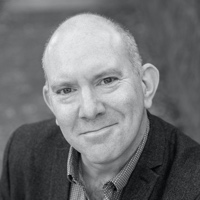 Alistair Lloyd is a Melbourne based writer and narrator who has been consuming good quality science fiction and fantasy most of his life.
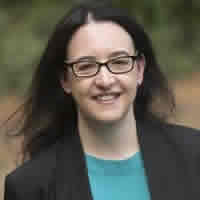
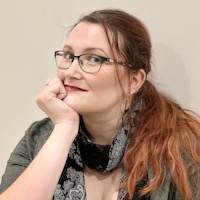 Emma Louise Gill (she/her) is a British-Australian spec fic writer and consumer of vast amounts of coffee. Brought up on a diet of English lit, she rebelled and now spends her time writing explosive space opera and other fantastical things in
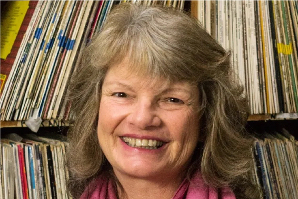 My time at Nambucca Valley Community Radio began back in 2016 after moving into the area from Sydney.