
By James C. Clar
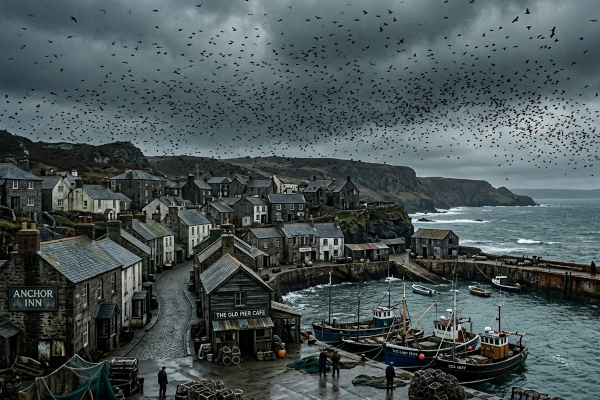
The wind coming off the sea smelled of rust and iodine. It swept through empty streets and over salt-bleached signs that bore the names of shops closed for a decade. The town of Waverley had become an empty husk. Dr. Zynda had grown used to the slow dissolution that surrounded him. What surprised him wasn’t the decay, but the fact that he could no longer recall what his hometown had once looked like.
He still made his accustomed rounds, though there were few patients left for him to see. The remaining inhabitants were mostly old and sick and had nowhere else to go. Time had evaporated for them the way dew had once disappeared from the grass on sunny summer mornings when they were young. All complained of dreams and of noises in the dead hours of the night that sounded vaguely like voices.
Zynda provided sedatives salvaged from Waverley’s pharmacy until the supplies were exhausted. Of course, he lied about the progress of the sea level and the extent of the radiation. His patients smiled politely though all knew the truth. It was only a matter of time before relentless tides or insidious particles claimed the rest of the town and the wraiths who inhabited it.
Professor Pointsman lived near the marsh in a clapboard house whose yellow paint had peeled to an uneven gray. The doctor would visit once or twice a week with a bottle of wine. The professor’s manner was always cordial but always somewhat preoccupied. They would sit at a table in front of the cracked, bullseye windows and talk about the past and what they thought the future might bring. Pointsman, once a noted ornithologist specializing in corvids, had recently begun recording the crows.
The birds had arrived three weeks ago … in droves. They blackened the sky late one autumn afternoon and filled the trees with their raucous, syncopated noise. The professor explained that this was common behavior.
“They form communal rookeries. It’s a hedge against the coming of winter. There’s warmth and safety in numbers, after all.”
“Still,” he said one evening as he sat across the table from Zynda adjusting his tape recorder. “I’m puzzled by them. They seem different to me this year.”
“How so? The doctor asked. He, too, had noticed something strange and oddly disturbing about the birds’ behavior.
“For one thing,” the professor began, “I’ve never seen so many in one place. Secondly, although crows are noisy as a general rule … these birds are downright loud. There’s a syntax, a structure, to their noise. You can only detect it if you listen as carefully as I have.” Pointsman gestured toward his tape recorder.
The doctor’s expression was that of a doting grandparent listening to a child declare the existence of an invisible friend. “Are you saying that they’re actually ‘speaking’?”
“Not speaking, exactly,” Pointsman corrected, “but definitely communicating. We’ve always assumed their calls were random. I’ve come to believe they may be commenting on us. What if they’re somehow chronicling what has happened to our world, and condemning those who allowed it to happen?”
The doctor poured them both more wine, letting the silence linger before replying. “You’re the expert, but it seems to me you’re giving them too much credit.”
The professor laughed, but his eyes betrayed how seriously he considered his assertion. “Nature, like Karma, has a way of dealing with those who underestimate her.”
Later, the wine gone, Pointsman pressed the recorder’s play button. Between the soughing of the wind and the rhythmic movement of the tress, Zynda heard the rasp of caws. The cadence was almost like that of words … but words that limned the outermost edge of meaning.
***
As autumn deepened, the air grew heavy with the scent of earth and salt. Inevitably Zynda saw fewer patients. His evenings with Professor Pointsman grew less frequent. Still, crossing the town square in the afternoons, the doctor was ever conscious of the crows. He heard, more distinctly every day it seemed, their strange chorus echo from tree to tree and as they wheeled above the marshes.
Another week passed. Zynda noticed that the professor’s house had been dark for a day or more. The doctor knocked once, then once again, louder this time. There was no response. The front door, sagging and out of alignment, opened with just a touch. Inside he found the table cluttered with tapes and notebooks. The kitchen window was open to the sound of wings.
Dr. Zynda followed a path through the reeds toward the field where the crows habitually gathered. If Pointsman were anywhere, it would be there. The birds rose as one at the doctor’s approach, a black wave lifting into a sky turned the colour of old bruises. The professor lay on the ground beneath where they had massed. His face was beyond pale. His eyes were now empty sockets. Much of the rest of his body had likewise been claimed by the birds. The doctor knelt beside his friend, the crows cawing madly in the trees around him. Knowing that there was nothing more that he could do, he rose and walked slowly away leaving the crows to finish what they had started.
Back at the professor’s house, Zynda poured himself a glass of wine to settle his nerves. Sitting at Pointsman’s table, he began playing tape after tape. The caws rose and fell in looping phrases that now seemed to the doctor to be deliberate. The sounds filled the small room as darkness fell. Then, deep in the night, beneath the hiss and chatter, he heard it … faint but unmistakable. It was the sound of his name drawn through the scrape of beak and the murmuring of the wind.
The tape spun on, whispering and repeating. Were the birds conveying some vital message or merely summoning him? Dr. Zynda assumed it was the latter. Either way, at first light, he’d return to the clearing and discover the answer for himself.

About the Author
James C. Clar divides his time between the wilds of Upstate New York and the more congenial climes of Honolulu, Hawaii.
In addition to his previous contributions to Antipodean Sci-Fi, his work has most recently appeared in The Blotter Magazine, Metastellar Magazine, Bright Flash Literary Review, The Magazine of Literary Fantasy and Freedom Fiction Journal.



 Alistair Lloyd is a Melbourne based writer and narrator who has been consuming good quality science fiction and fantasy most of his life.
 Tim Borella is an Australian author, mainly of short speculative fiction published in anthologies, online and in podcasts.
 Mark is an astrophysicist and space scientist who worked on the Cassini/Huygens mission to Saturn. Following this he worked in computer consultancy, engineering, and high energy research (with a stint at the JET Fusion Torus).
 Brian Biswas lives in Chapel Hill, North Carolina, USA.
 Tara Campbell is an award-winning writer, teacher, Kimbilio Fellow, fiction co-editor at Barrelhouse, and graduate of American University's MFA in Creative Writing.
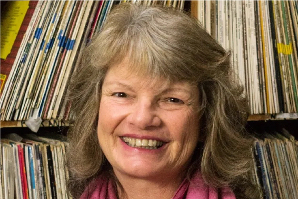 My time at Nambucca Valley Community Radio began back in 2016 after moving into the area from Sydney.
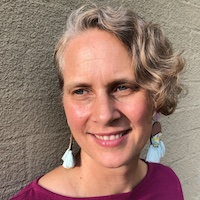 Merri Andrew writes poetry and short fiction, some of which has appeared in Cordite, Be:longing, Baby Teeth and Islet, among other places.
 Barry Yedvobnick is a recently retired Biology Professor. He performed molecular biology and genetic research, and taught, at Emory University in Atlanta for 34 years. He is new to fiction writing, and enjoys taking real science a step or two beyond its known boundaries in his
 Sarah Jane Justice is an Adelaide-based fiction writer, poet, musician and spoken word artist.
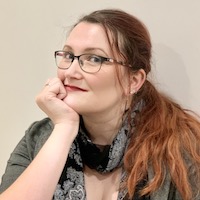 Emma Louise Gill (she/her) is a British-Australian spec fic writer and consumer of vast amounts of coffee. Brought up on a diet of English lit, she rebelled and now spends her time writing explosive space opera and other fantastical things in
 Geraldine Borella writes fiction for children, young adults and adults. Her work has been published by Deadset Press, IFWG Publishing, Wombat Books/Rhiza Edge, AHWA/Midnight Echo, Antipodean SF, Shacklebound Books, Black Ink Fiction, Paramour Ink Fiction, House of Loki and Raven & Drake
 Ed lives with his wife plus a magical assortment of native animals in tropical North Queensland.