By DJ Tantillo
Silt, gravel, even rock — through all of it they burrow, ingesting inorganic materials that feed the bacteria squatting within, producing energy from dark chemistry. Giant shipworms fell monuments. The worshippers have gone, but the worms roam the deep, unrelenting, consuming, erasing…
The temples cracked. Their balance faltered and M075 expected them to come crashing down, the thunder of collapse inevitable. It was M’s first time at such an event. He wasn’t sure what to make of it.
The humans, all but those on display, had been replaced. Because they were irrelevant. It was finally M’s turn to see what they were like. They seemed concurrently disciplined and undomesticated.
Since the synthetics did not allow weapons of war to exist, the folly of sport would have to suffice. And so it did around the world. Temples to gods and sacred spirits were lost to time and worms, while those to personal, primitive, unarmed conflict remained — sterilised. M and his colleagues filled the temples now.
M wasn’t programmed for amazement, but he did note that the two humans had stood, unmoving, for a long time, ignoring the blood released by the force and abrasion of their contact. Cleaning the liquid from the ground and cleansing the earth on which it fell, if it succumbed to gravity when they would not, would require special skills, special tools, a sacred spirit. Or so the human literature stated. M thought a scoop and brush would do just fine.
Still, M was compelled to watch. The humans’ intelligence, devoid of spirit, had somehow evolved to maintain a fascination with such combat.
Still, the blood would not fall, no matter how deeply it M examined it. It adhered to the giants, and the giants adhered to one another, each’s momentum canceling out that of his opponent. The lubrication of sweat was insufficient to overcome the friction of behemoths.
That left human psychology to decide the winner. One appeared to be creative, looking for new ways to improve his grip, new angles to attack, things his opponent would not expect. The other was mechanical, a pushing machine with pulsing muscles but gears forced to grind. M kept watching, the outcome incalculable.
Neither human found an edge. Each subtle thrust or twist of hip or arm or chest was counterbalanced, leading again and again to a net velocity of zero. The crowd showed their appreciation for this nothingness. It gave them extra time in the arena.
The warriors’ levels of tiredness finally diverged — their mental, not physical, fatigue decreasing to different degrees. The reigning grand champion fell to the ground, his opponent’s perspiration adhering to the clay that coated the fallen in a temporary shroud of defeat. M responded by tossing his seat cushion toward the opponents — a traditional gesture whose meaning was lost to him — remembered only by the combatants and their kin.
At that moment of outdated human victory, the greatest of waves finally reached M’s arena. M had been warned of the impending danger, of course. Knowing had not impacted his consumption of the combat display.
The world in which these battles were fought was different from that during the time when the humans reigned. Less land, more storms, more frequent renewal. With the arrival of the water, the blood, everything grown and felt, everything manufactured, was gifted new momentum. M and the rest were washed away. In moments, only smooth, purified clay was left behind.
Religion had died a bloody death generations before, but tradition had persisted. Water, at last, took away that punishment. Nature would always remix the building blocks, simply as an expression of immutable laws, of probability, and of randomness.
The synthetics were not subject to any myth of free will. Nor any sense of sympathy. They were as content as pebbles to be swept away and deposited on the ocean floor, to become food for the worms.

About the Author
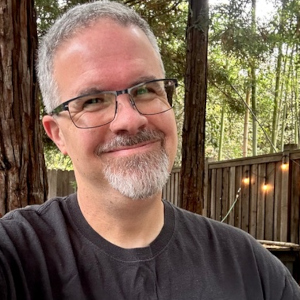 DJ Tantillo loves to study the complexity associated with his young children and with the mechanisms of chemical reactions.
He does both in Northern California, where he is a professor of chemistry.
He publishes flash fiction and poetry because he has many strange ideas, and peer-reviewed chemistry journals aren’t interested in all of them.
DJ’s additional work can be found here: <https://blueline.ucdavis.edu/2ndTier/3rdTier/FlashFiction.html>.



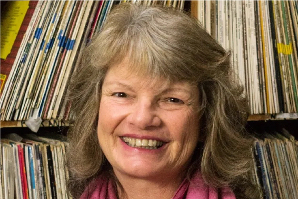 My time at Nambucca Valley Community Radio began back in 2016 after moving into the area from Sydney.
 Tara Campbell is an award-winning writer, teacher, Kimbilio Fellow, fiction co-editor at Barrelhouse, and graduate of American University's MFA in Creative Writing.
 Alistair Lloyd is a Melbourne based writer and narrator who has been consuming good quality science fiction and fantasy most of his life.
 Sarah Jane Justice is an Adelaide-based fiction writer, poet, musician and spoken word artist.
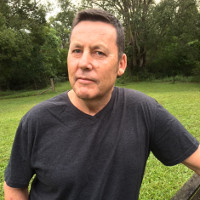 Tim Borella is an Australian author, mainly of short speculative fiction published in anthologies, online and in podcasts.
 Merri Andrew writes poetry and short fiction, some of which has appeared in Cordite, Be:longing, Baby Teeth and Islet, among other places.
 Mark is an astrophysicist and space scientist who worked on the Cassini/Huygens mission to Saturn. Following this he worked in computer consultancy, engineering, and high energy research (with a stint at the JET Fusion Torus).
 Geraldine Borella writes fiction for children, young adults and adults. Her work has been published by Deadset Press, IFWG Publishing, Wombat Books/Rhiza Edge, AHWA/Midnight Echo, Antipodean SF, Shacklebound Books, Black Ink Fiction, Paramour Ink Fiction, House of Loki and Raven & Drake
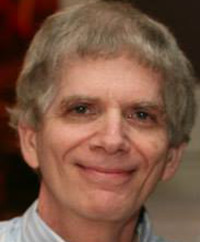 Barry Yedvobnick is a recently retired Biology Professor. He performed molecular biology and genetic research, and taught, at Emory University in Atlanta for 34 years. He is new to fiction writing, and enjoys taking real science a step or two beyond its known boundaries in his
 Emma Louise Gill (she/her) is a British-Australian spec fic writer and consumer of vast amounts of coffee. Brought up on a diet of English lit, she rebelled and now spends her time writing explosive space opera and other fantastical things in
 Brian Biswas lives in Chapel Hill, North Carolina, USA.
 Ed lives with his wife plus a magical assortment of native animals in tropical North Queensland.